

March 2026
Editor’s Note – March 2026
Friendly and Comradely greetings,
Communities are grappling with multiple crises that are deeply economic in nature. The Bench Marks Foundation Principles points out that “Economic life starts …with communities.” Current global shocks and local challenges converge to shape the daily realities of communities. In this issue we are looking at:
Water Crisis in South Africa: Ongoing shortages and infrastructure failures underscore that water is not only a basic right but also a cornerstone of economic survival. While the breakdown in infrastructure in Johannesburg and Gauteng attracts all the headlines, water is scarce in mine affected communities and hardly attracts the attention it deserves. Here we feature stories of hardship in these communities.
Alternative Mining Indaba Highlights: Communities continue to demand that mining revenues serve development rather than exploitation. The call for environmental accountability and inclusive participation underscores the need for a mining economy that sustains rather than destroys.
The US-Israeli War on Iran War impacts on our daily lives: Global conflict has once again exposed South Africa’s vulnerability to oil price shocks. Rising fuel costs, a weak Rand, and inflation pressures demonstrate how distant wars reverberate in our homes, taxis, and workplaces. While there is a call for renewable energy the US-Israeli war in the Middle East makes a mockery of this call. Fresh from kidnapping the sitting Venezuelan President and imposing a blockage to starve Cuba the US-Israeli Axis in the Middle East attacked and “decapitated” the Iranian leadership to “secure” access and domination in another region of the world. In the “end of an era” this demonstration of “power” is all about declining United States power and influence – and naked imperialism.
Budget Speech 2026: While the withdrawal of the VAT hike and adjustments to grants offer relief, communities must monitor whether these promises translate into tangible improvements, especially for youth, women and marginalised groups.
Together, these crises remind us that economic power is directed towards keeping elites, benefiting and the dispossessed, the working class and poor in “their place”. It is reflected in the price of bread, the cost of transport, housing, and lack of infrastructure.
It is the resilience of communities and their capacity to organise that will make a difference!
With appreciation and solidarity,
Editorial Team – Bench Marks Foundation Bulletin
Declaration Highlights – AMI 2026
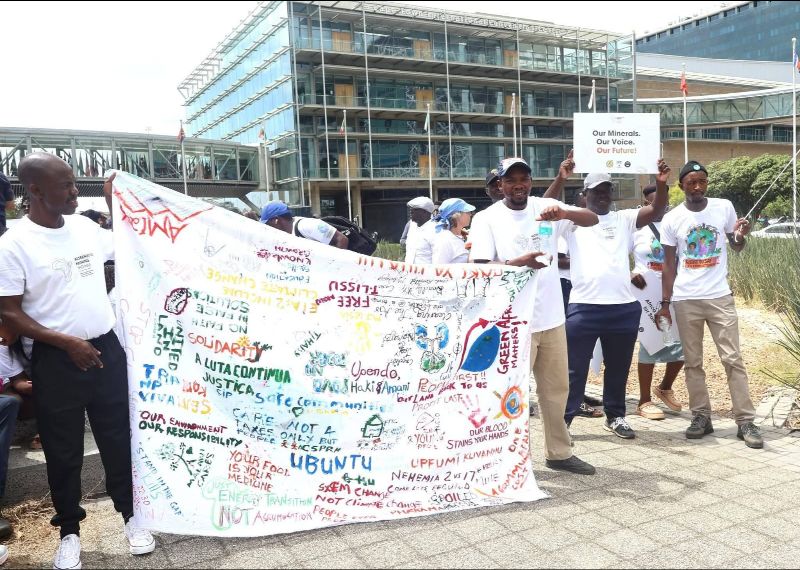
Photo courtesy : Centre for Environmental Rights (CER)
The Alternative Mining Indaba (AMI) 2026, held in Cape Town in February 2026 under the theme “Alternative Stories of Mining – United in Solidarity with the Mining-Affected Communities across the Continent”, reaffirmed its role as a counter-space to extractives. Communities, civil society, faith-based actors, and researchers united to insist that mining must serve the public good rather than private greed. The gathering built on national, regional, and continental efforts to strengthen solidarity and called for justice in mining governance.
Participants highlighted the ongoing injustices of extractives: land dispossession, forced evictions, ecological destruction, and the sidelining of marginalized voices. They raised deep concerns about how relocation processes replicate apartheid-era removals, how graves and ancestral sites are disturbed, and how critical minerals are becoming a new frontier for exploitation under geopolitical pressures. The declaration underscored that dispossession is not only historical, but a continuous lived reality undermining livelihoods, heritage, and dignity.
The AMI 2026 issued strong demands to governments, businesses, and financiers: enforce transparency in mining contracts, ensure revenues fund public goods, protect communities from exploitation, and guarantee fair compensation and meaningful participation. Civil society, faith-based actors, and communities committed to amplifying grassroot voices, resisting exploitation, and building solidarity across borders. The declaration concluded with a call to transform mining into shared prosperity, climate justice, and intergenerational equity.
The full communiqué can be accessed here: Click here: Declaration-of-the-Alternative-Mining-Indaba-2026.
..ARTICLES..
Picture courtesy of: The Citizen
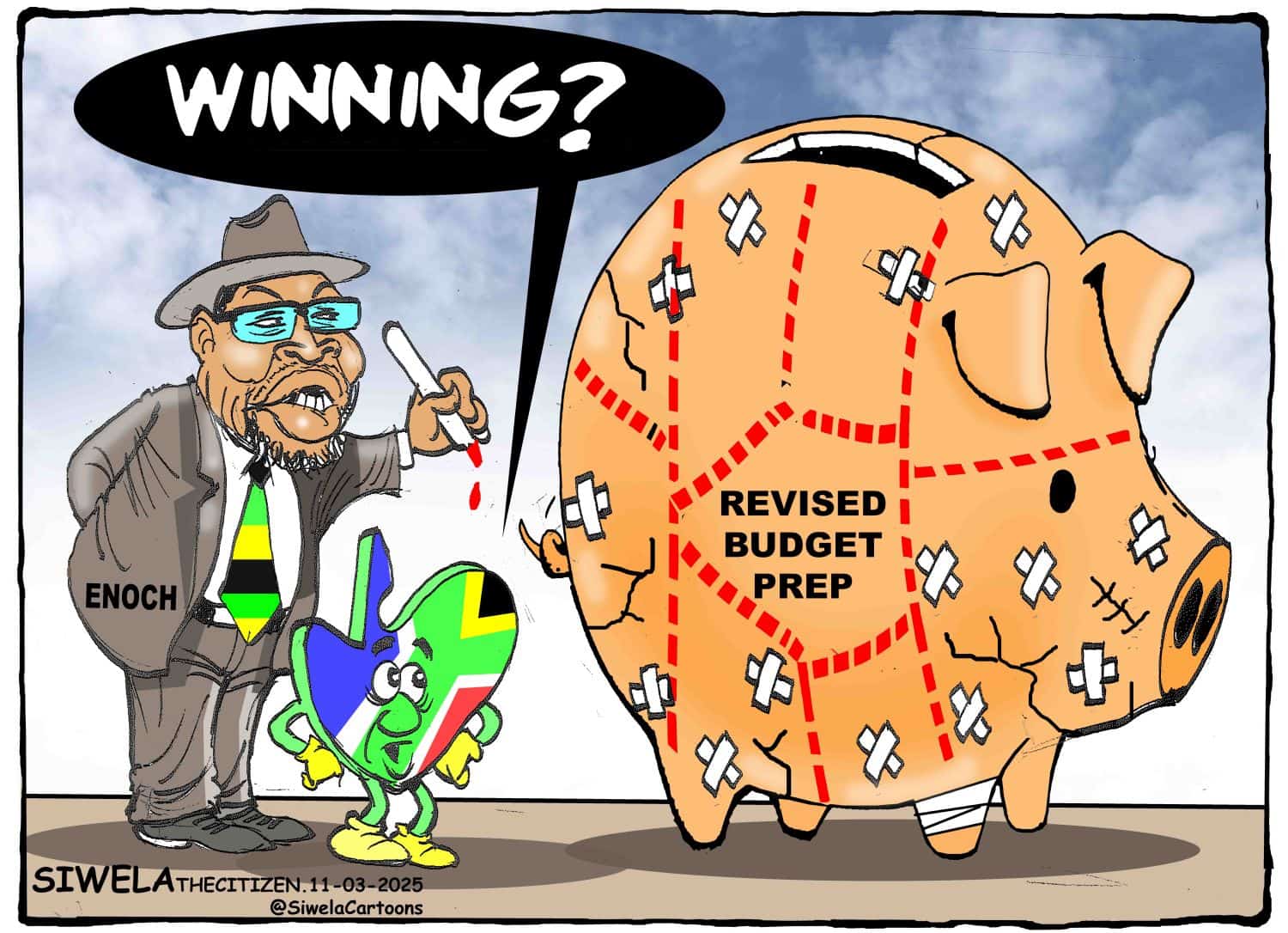
South Africa’s 2026 Budget Speech: Stability or Austerity?
Finance Minister Enoch Godongwana delivered the 2026 Budget Speech in Cape Town this March, presenting what he called a turning point in the management of public finances. He announced that, for the first time in 17 years, the debt-to-GDP ratio will stabilise and begin to decline. The government also reported a narrower deficit, easing inflation, and tax relief measures. These steps, according to the Minister, mark progress in stabilising the economy and creating space for better public services.
Civil society organisations, however, have raised sharp concerns. The Alternative Information & Development Centre (AIDC) argues that the budget prioritises investor confidence over the needs of ordinary South Africans. They point out that the modest growth projections, barely reaching 2% by 2028, are far too weak to address structural unemployment. For AIDC, the absence of a bold jobs plan means the budget risks locking the country into low growth and continued austerity FACTSHEET: Budget 2026 Explainer Series – AIDC | Alternative Information & Development Centre.
Similarly, the South African Federation of Trade Unions (SAFTU), led by Zwelinzima Vavi, dismissed the budget as “stabilisation for markets, not transformation for the people.” SAFTU criticizes the focus on primary surpluses, warning that this approach celebrates fiscal discipline while workers and communities face collapsing services.
The daily impact of the budget is mixed. While debt stabilisation reduces interest costs and theoretically frees funds for schools, clinics, and infrastructure, delivery remains uneven. Adjusted tax brackets provide relief for some households, but fuel and electricity levies continue to raise living costs. Inflation has eased slightly, making basic goods more affordable, yet unemployment remains stubbornly high, with growth too modest to create jobs at scale.
Fiscal policy matters because it is not just about numbers in Parliament; it shapes whether schools receive funding, whether clinics have medicine, and whether jobs are created through public investment. The 2026 Budget shows progress in stabilising debt and deficits, but this stability comes at the expense of transformation. Without decisive measures to tackle unemployment, poverty, and inequality, fiscal discipline risks entrenching austerity rather than delivering renewal. Communities must remain vigilant, because fiscal policy influences whose lives improve and whose lives are left behind.
Picture courtesy of: Eric Mokoua
“Wonderkop vs. BASF & Sibanye: Community Pushes German Supply Chain Act for Justice”
By: Eric Mokoua
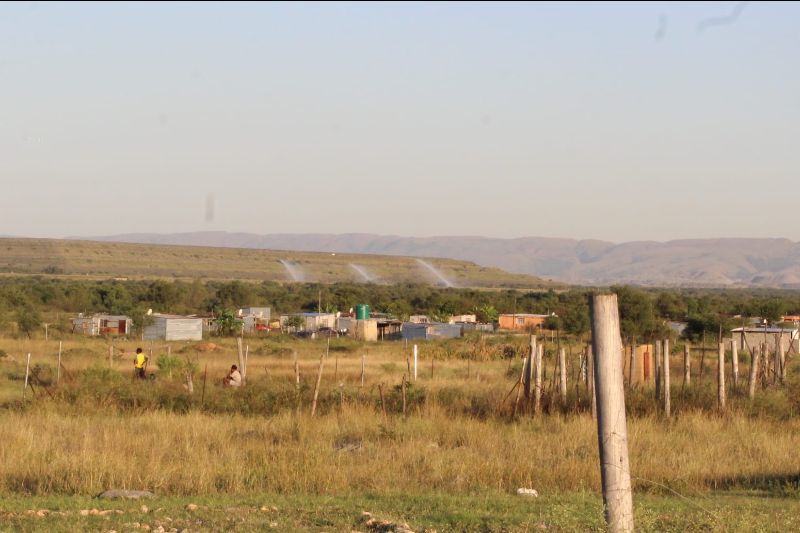
The Wonderkop Community in Marikana, South Africa, is using the German Supply Chain Act to strengthen their struggles in a call for environmental remedies and human rights due diligence, following BASF, historically the largest buyer of platinum, and Sibanye-Stillwater’s failed solutions.
The German Supply Chain Due Diligence Act system (BAFA) has officially accepted the Wonderkop community’s, complaint against BASF and Sibanye Stillwater. This follows the responses from both BASF and Sibanye denying the environmental impacts caused by their operations in Wonderkop. A tailings dam overflow in April 2025 and the constant stack emission of the smelter with a dysfunctional monitoring station are the main causes for concern. In the efforts to counter the complaint, the company is now involved in unilateral remedial action, and they have also announced that they will commission an independent environmental assessment study.
The Wonderkop community, with more than 20,000 residents, is within a one-kilometre radius of the Sibanye Stillwater mining infrastructure in the Northwest province of South Africa. Over the years, the piling grievances resulted in an implosion that led to the labour standoff, which left 36 miners dead in 2012 in an unprecedented Massacre. The community raised challenges regarding other human rights issues concerning social and environmental risks, posing a great danger to the community. Already in 2023, a child was found dead in the tailing facility at the mine site.
In 2023, a seepage was discovered at a tailing facility, TD 6, which sends litters of mine residue affluence into the Maretlwane river. This was compounded by environmental pollution, which included air pollution caused by the tailing dust and smelter emissions. The dysfunctional air monitoring station and the sewer plant effluent channeled to the stream add salt to the wounds.
The current community’s complaint before the German Supply Chain Due Diligence Act concerns the drowning of a seven-year-old child in an unsecured dam, the tailing facility overflow discharge into the Maretwlane stream, lack of transparency and accountability, poor community engagement, and failure to implement previous commitments. These have raised alarm in the Human Rights due diligence complaint system in Germany, prompting a decisive intervention. In a letter of acceptance, the Head of unit writes, “In the course of the examination to date, I have determined that the case is indeed a substantiated request under Section 14 para. 1 no. 2 LkSG (official action under the German Due Diligence in Supply Chains Act (LkSG))”.
The complaint follows the failed engagements with both BASF and Sibanye-Stillwater regarding the severe environmental pollution in Wonderkop. Despite the April 2025 tailing overflow, there has been an ongoing tailing seepage into the stream, the sewer leakage in the community, and the smelter emissions with a reported defective monitoring station. Given that these environmental issues have been persistent, yet engagements did little to resolve them, the community of Wonderkop took advantage of the available mechanism provided by the German government, obliging the German companies to adhere to a human right’s due diligence process.
The Bench Marks Foundation worked closely with the Wonderkop community and supported the community monitoring approach, which encourages constant monitoring of the impact.
The Bench Marks Foundation released a Policy Gap 14 research report: Re-imagine Wonderkop– Paradise or Nightmare? The reports detailed the conditions in the Wonderkop community, the obsession of Sibanye Stillwater to preserve a good image at all costs. It reveals how the workers’ housing is poorly maintained, and the retired workers are thrown into the streets. The report also points to the location and design of the tailing facility, which is directed to flow into the river, which is exactly what happened in April 2025.
The community used the report to substantiate their complaint against the two companies. The Wonderkop community has amassed a huge amount of data, like pictures from the tailing facility, testing tailing residue, and observing the South African Air Quality Information System to monitor the air monitoring station’s data transmission. The community has also enquired with the municipality on the functionality of the digital air monitoring stations in the area, but no avail.
To address the smelter emission issue, the manager of the smelter, who has been part of the engagement, together with the Sibanye representatives, committed to transparency. Another commitment was made to create awareness of the smelter and its impact on the community. This action has not come to fruition.
All these failures have led to the escalation of this long-standing complaint, and it landed on the German Supply Chain Due Diligence Act system.
Brown Matloko, a community activist who was instrumental in laying out the complaint, never thought this would be complex and reached this far. “When I reached out to Bench Marks Foundation after the imminent threat of the tailing problem, I thought this was not going to take long, but now it has become a whole lesson. I have discovered many environmental infringements of this company, whilst trying to solve another” said Matloko.
..RESEARCH..

Photo Courtesy :Visual Capitalist.com
Divide and Rule: How Western Powers Shaped Middle East Conflicts and Global Institutions
By: David Van Wyk
The history of U.S. and Western intervention in the Middle East reveals a recurring strategy of divide and rule, rooted in the overthrow of democratic movements and the manipulation of sectarian divisions. In 1953, the CIA and MI6, the United States and United Kingdom intelligence services orchestrated Operation Ajax, removing Iran’s democratically elected Prime Minister Mohammad Mossadegh to reinstall the Shah, a pro-Western puppet. The Mossadegh-led government nationalised the oil industry. This intervention was driven by the desire to reclaim control over Iran’s nationalized oil industry. When the Shah was toppled in 1979, Washington armed Saddam Hussein’s Sunni regime to wage war against Iran’s new Shia government, fueling an eight-year conflict that devastated both nations.
Despite massive U.S. support for Hussein, Washington later turned against its former proxy, invading Iraq under the pretext of that Iraq possessed ‘weapons of mass destruction’, the very weapons supplied during the Iran-Iraq war. The U.S. then shifted its backing to Shia factions in Iraq, while simultaneously targeting Sunni rulers in Syria. This pattern underscores a broader Western strategy: exploiting sectarian divides to maintain dominance over the region’s resources and political order. Arabs, much like Africans under colonialism, have been fragmented and ruled through external manipulation.
After World War II, institutions such as the United Nations, the Geneva Conventions, and the International Criminal Court were established to prevent genocide and war crimes. Yet these bodies largely functioned to protect Western interests, prosecuting leaders from the Global South while shielding Western allies. Israel’s ongoing occupation and war crimes in Palestine, backed by the U.S. and Europe, expose this hypocrisy. South Africa’s intervention at the International Criminal Court (ICC) to challenge Israeli actions has revealed the racialized nature of the global legal order. As Western powers now pivot to a vague “rules-based order,” the mask of neutrality has slipped, exposing a system designed not for justice, but for control of global resources and suppression of the Global South.
..Grassroots Voices..
Picture courtesy of: Thokozile Mntambo:
The calamity of water struggles in the post-mining era
By: Makhotla Sefuli
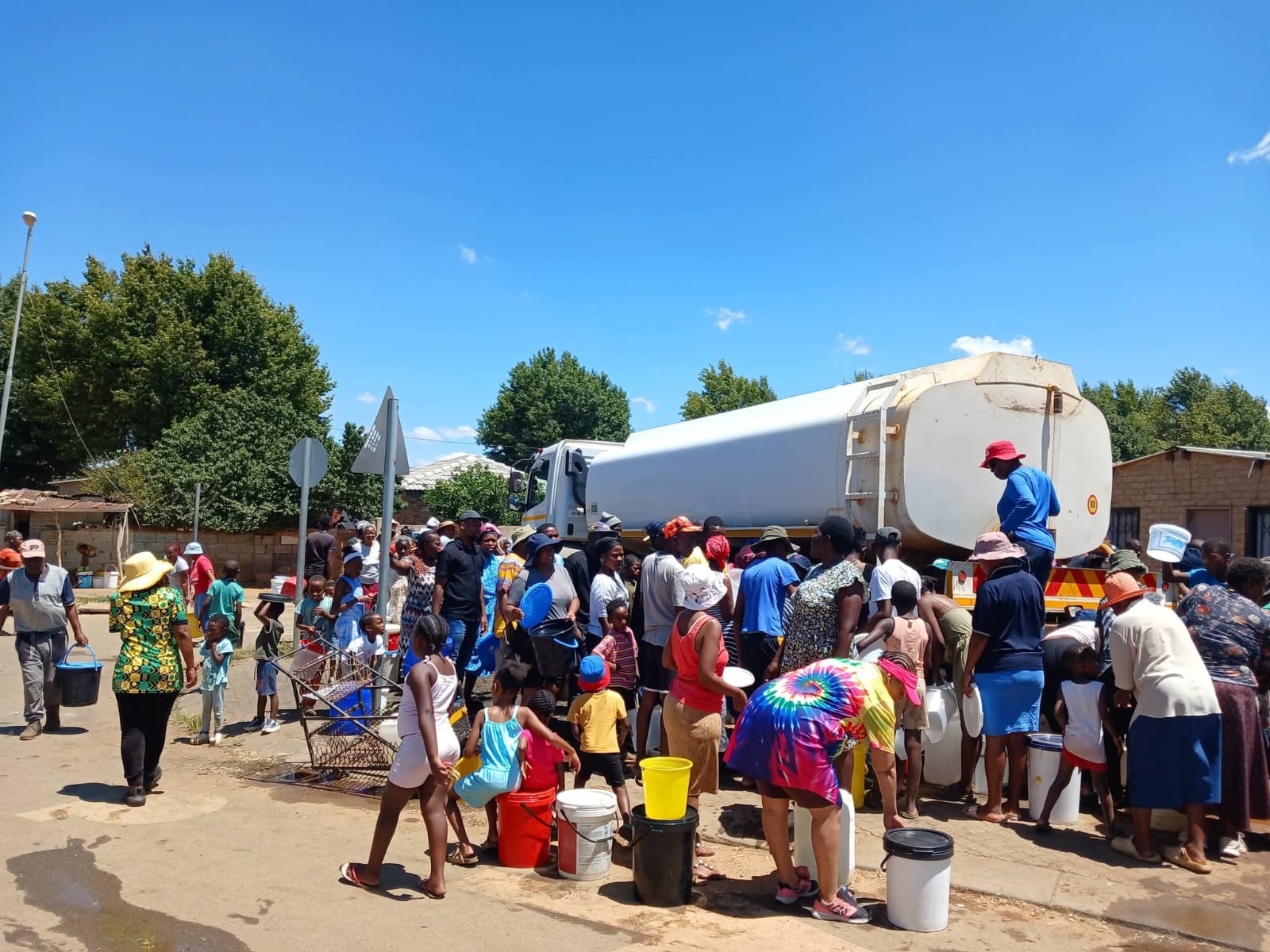
South Africa is a water scarce country, and the scarcity has escalated to catastrophic proportions for most communities across the length and breadth of our country. Municipalities are struggling to provide clean and drinkable water for the residents, and that has become a common factor for rural, urban, and metropolitan municipalities alike.
The water rationing in some municipalities has resulted in the loss of employment as companies had to disinvest and move to areas that have sufficient supply of clean water. Clover had to shut down its plant in the Ditsobotla municipality in the Northwest Province and move to KwaZulu Natal (KZN). The city of Cape Town had to introduce day zero. The recent protests by the residents of Johannesburg and the declaration of water as a national disaster by the president indicates the harsh reality that we face on daily basis.
Urbanization and spatial planning of our cities always gave priority to the development of industry than the needs of residents. The industrial evolution and revolution that started late in the 19th century until the middle of the 20th century brought both misery and excitement into our cities. The introduction of different types of industries came with the much-needed development that was essential to the growing demand of labour that brought the need for housing and provision of basic services such as water. Water is a basic human right, as is enshrined in the constitution of the country.
The decline of large-scale industries left our cities in ruins and decaying infrastructure that lay in abundance, and that has had a huge impact on the provision of clean water. The migration of people from rural areas into the cities in search of better opportunities has put a strain on municipalities to provide water adequately. Our local municipalities simply have no capacity to provide enough water for residents. The problem is getting worse instead of getting better. People are getting frustrated and they vent their anger on public properties and that results in the destruction of infrastructure such as roads and public halls.
What is more serious is the lack of clean water for the communities that were historically dependent on extractive industries. These communities live with the legacy of contaminated underground water. Acid mine drainage (AMD) has affected mining hosting communities and is a major challenge for municipalities to provide clean water for the residents. Some people have drilled boreholes on their properties as a way of solving their water challenges, but this raises new problems. Underground water is highly contaminated with AMD and poses a very serious threat to the health of both humans and plants alike. The household utensils such as kettles, cutlery, and cookware bear laces of algae that are visible when they dry out.
Municipalities don’t have the money to buy enough fluoride to clean the water and tap water comes out with a brown colour for some people. This has resulted in the outbreak of water borne diseases in some rural municipalities in Limpopo province and some parts of Tshwane Metropole. Many municipalities have failed in both the blue and green drop tests when it comes to the provision of clean water.
Another sector that is highly affected is agriculture. Grain farmers have incurred huge losses in terms of output and that compelled them to lay off some of their employees and rely on casual labour. The price of staple foods has increased dramatically, and the government had to bail out some farmers in most cases and that has put strain on the fiscal account. Our farmers can’t compete on the international market because their products are not of good quality.
Livestock farmers are also faced with huge challenges because their animals drink from the wells that contain highly contaminated water from the underground.
A few cases serve as classical examples of how terribly the water crisis has affected the local farming community in the Free State province.
Mr. Tshabalala is an emerging black grain farmer on the outskirts of Welkom who has suffered immense losses as a result of the contaminated underground water. His farm is situated along the R30 highway just outside Odendaalsrus. His crops have not yielded the desired output over the past three years. The harvest time is normally around the months of winter, and that is when the maize crops are expected to be more than two meters in height. In his case, the crops are always between 1,2 and 1,5 meters in height. We took water samples from his farm and sent them to the laboratory after we visited his farm with the Gauteng team of the Community Monitoring School. The results came back and corroborated what was suspected all along.
The livestock farmers of Nyakallong are another example of a community that suffers immensely from contaminated water by mining operations. They comprise of elderly men who used to work on the mines and decided to go into livestock farming by investing their pensions in the buying and selling of livestock as a means of making a living after many years of working on the mines. They suffered terrible losses after their animals died from an unknown disease under mysterious circumstances. One farmer lost two pregnant cows on the same day after noticing what looked like mucus on their noses and blood coming from the rear part of the animals. A total of twelve cattle died in less than one month and some farmers could not afford the expensive vaccines while other only started vaccinating their animals when it was already late to do so.
Many residents in Nyakallong long have been complaining about the brown colour of tap water. The tap water is no longer safe to drink, and not everyone can afford to buy purified water from the local supermarkets. Selling purified water has become a booming business in recent times because people cannot risk their lives by drinking contaminated water from the taps. The municipality has responded with cutting the supply of water in affected areas, in some areas the water is cut overnight between 19h00 and 07h00 in the morning. The reason for this is to allow the reservoir to replenish during the night so that residents can have a water supply during the day hours.
Government intervention came too late because the water crisis did not start yesterday. The first step that must be taken is to hold the polluters into account. Mining companies came and left without preparing and addressing the consequences of mining in the east mining phase. This is a clear indication of the impunity of some companies that always sign blank cheques for our municipalities.
..RECENT MEDIA ENGAGEMENTS..
Our Free State frea facilitator Makhotla Sefuli discussed Minister Gwede Mantashe’s call for a specialised unit to address unregulated mining, highlighting community concerns and the socioeconomic impact of illegal mining in the province.
Moses Cloete serves as the editor at large of this edition. Unless otherwise indicated the writing and presentation of the Bulletin is by Thokozile Mntambo. Olebogeng Motene is responsible for additional editing and layout of the newsletter. Simo Gumede is responsible for the members and partners database management. Header Photo: Courtesy of inspiredpencil.com.
Copyright © 2026 Bench Marks Foundation, All rights reserved.